The most honest conclusion is that there is no single “best” food list for everyone with constipation. A stepwise approach makes more sense: identify the symptom pattern, improve the basics, cautiously test one well-described option and assess the result rather than combining several supplements at once.
First: what do we mean by constipation?
Constipation is not only infrequent bowel movements. Hard stools, straining, a feeling of incomplete evacuation or a sensation of blockage also matter. Causes may include changes in diet or activity, low fluid intake, medicines, irritable bowel syndrome, pelvic-floor disorders or conditions that need investigation. This article therefore cannot replace clinical assessment.
The British Dietetic Association (BDA) guideline, based on a review of randomised trials, does not endorse one universal diet as treatment for chronic constipation. It does identify several specific dietary interventions that may be considered for appropriately selected people. That is the difference between “there is a signal of benefit” and “this works for everyone”.
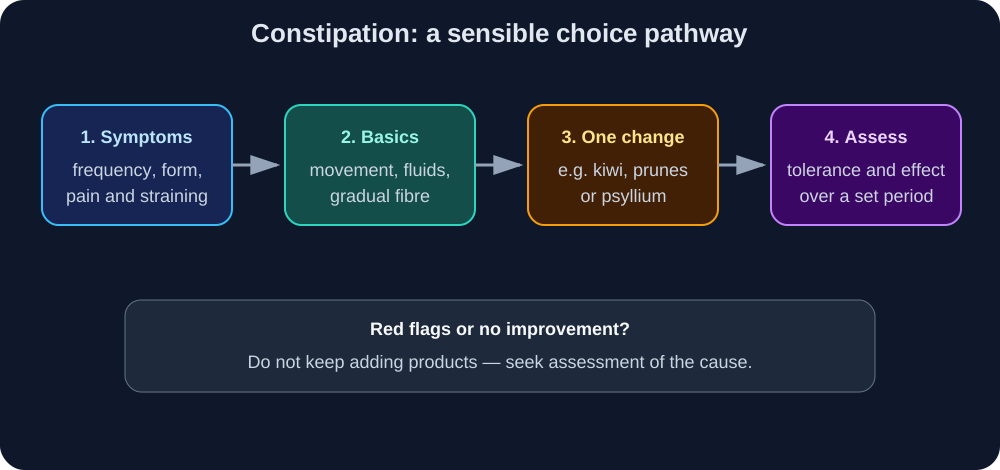
Fig. 1. A practical route from symptoms and dietary basics to a cautious single intervention.
Which foods are most reasonable to consider?
Kiwi: an interesting food, not a miracle fruit
Studies in people with constipation suggest that green kiwifruit may increase bowel frequency and improve gut comfort. Fibre, water and the enzyme actinidin may all contribute, but the mechanism is not a reason to promise the same result to everyone. Trials used defined portions and observation periods, and outcomes depended on the participants and endpoints.
Practically, kiwi may be a reasonable food-based experiment if it is well tolerated. Allergy, oral reactions or worsening irritable-bowel symptoms are reasons to stop. A kiwifruit extract supplement should not automatically be assumed to be equivalent to the whole fruit.
Prunes: fibre and sorbitol in one food
Prunes contain fibre and sorbitol, which can increase water in the bowel through an osmotic effect. Comparative studies suggest they may make bowel movements easier for some people with chronic constipation. A larger portion can also cause gas, cramps or diarrhoea, and the sugar content matters for people monitoring their intake.
Rye bread: a study signal, not a rule
The BDA guideline includes trials in which rye bread improved some constipation outcomes compared with wheat bread. That does not mean every product labelled “rye” contains a similar amount of fibre, or that more rye will help in every bowel condition. Check the ingredient list, increase portions gradually and monitor tolerance.
Fibre: important for the diet, but not “more at any cost”
The European Food Safety Authority considers 25 g of fibre per day an adequate intake for normal bowel function in adults, while NIDDK gives an age- and sex-dependent adult range, often around 22–34 g per day. These are general dietary reference points, not an individual prescription for chronic constipation.
A rapid increase in fibre without enough fluid can worsen bloating, pain and a feeling of stool retention. More importantly, further fibre may not improve symptoms for some people with constipation. Increase it gradually, use varied sources and stop the experiment if symptoms clearly worsen.
Supplements: psyllium, magnesium and probiotics
Psyllium — the better-described option, with conditions
Psyllium husk forms a gel and increases stool bulk. The BDA guideline identifies a benefit from psyllium for some people with chronic constipation. It must be taken with an appropriate amount of fluid. Anyone with swallowing difficulty, suspected obstruction, severe pain or rapidly increasing bloating should not start it without advice. It may need to be separated from medicines; check the product information and ask a pharmacist.
Magnesium — preparations are not interchangeable
Some magnesium salts can have an osmotic effect and are included in guidance as one possible option. The effect, tolerance and risk depend on the compound, amount, kidney function and other medicines. Diarrhoea is not proof that a supplement is “cleansing” the bowel. Extra caution is needed with kidney disease, dehydration or multiple medicines. I do not give one universal dose because that would be pseudo-personal advice without knowing the person’s health status.
Probiotics — the problem with generalising
A probiotic is a specific strain, not a synonym for “good bacteria”. Results depend on the strain, dose and patient group; it is not honest to promise that any product carrying the word “probiotic” will work for chronic constipation. If someone chooses to try one, the strain should be clearly stated and the effect assessed after a defined period rather than changing five other things at the same time.

Fig. 2. A mechanism, a single trial and a guideline answer different questions; they are not the same level of certainty.
A simpler, safer way to test an option
- Record symptoms for a few days: bowel frequency, stool form, straining, pain, bloating and medicines.
- Check the basics: regular meals, daily movement, fluids appropriate to your health and gradually varied fibre sources.
- Choose one change: for example one food option or psyllium, not several products at once. Read the label and follow its directions.
- Assess tolerance: increasing pain, vomiting, marked bloating, diarrhoea or inability to pass gas means stopping the experiment and seeking advice.
- If it persists, look for the cause: chronic constipation may need a plan from a clinician or dietitian, not another supplement.
Conclusion
The most useful options do not form one magical list. Kiwi and prunes are reasonable food-based choices supported by intervention research; rye bread and mineral-rich water have more limited, context-dependent signals. Psyllium is the better-described fibre supplement, but it requires fluid and care. Magnesium and probiotics should not be treated as universal solutions.
Frequently asked questions
Does more fibre always help constipation?
No. Adequate fibre matters for the general diet, but adding more is not automatically effective or well tolerated by everyone. Increase it gradually and seek advice if symptoms persist.
Can kiwi or prunes make bowel movements easier?
Intervention studies suggest a benefit for some people, but these foods do not replace diagnosis and are not guaranteed treatment for everyone.
When is prompt medical advice needed?
Blood in the stool, rectal bleeding, persistent or severe abdominal pain, vomiting, fever, marked bloating with inability to pass gas, weight loss, a sudden change in bowel habit or no improvement require assessment.
Sources and further reading
- The Epoch Times: Top Foods and Supplements to Ease Constipation — starting material; this article is an independent analysis, not a translation or copy.
- British Dietetic Association: evidence-based dietary guidelines for chronic constipation — evidence review for specific dietary interventions.
- BDA guideline evidence paper, PMC — methods and findings from the randomised-trial review.
- NIDDK: Eating, Diet, & Nutrition for Constipation — fibre, fluids and dietary basics.
- King’s College London: kiwifruit and chronic constipation and the study publication — intervention evidence on kiwi.
- EFSA: dietary reference values for carbohydrates and dietary fibre — reference point for adequate fibre intake in the general diet.
- NIDDK: symptoms and causes of constipation and NHS: constipation — warning signs and when to seek assessment.