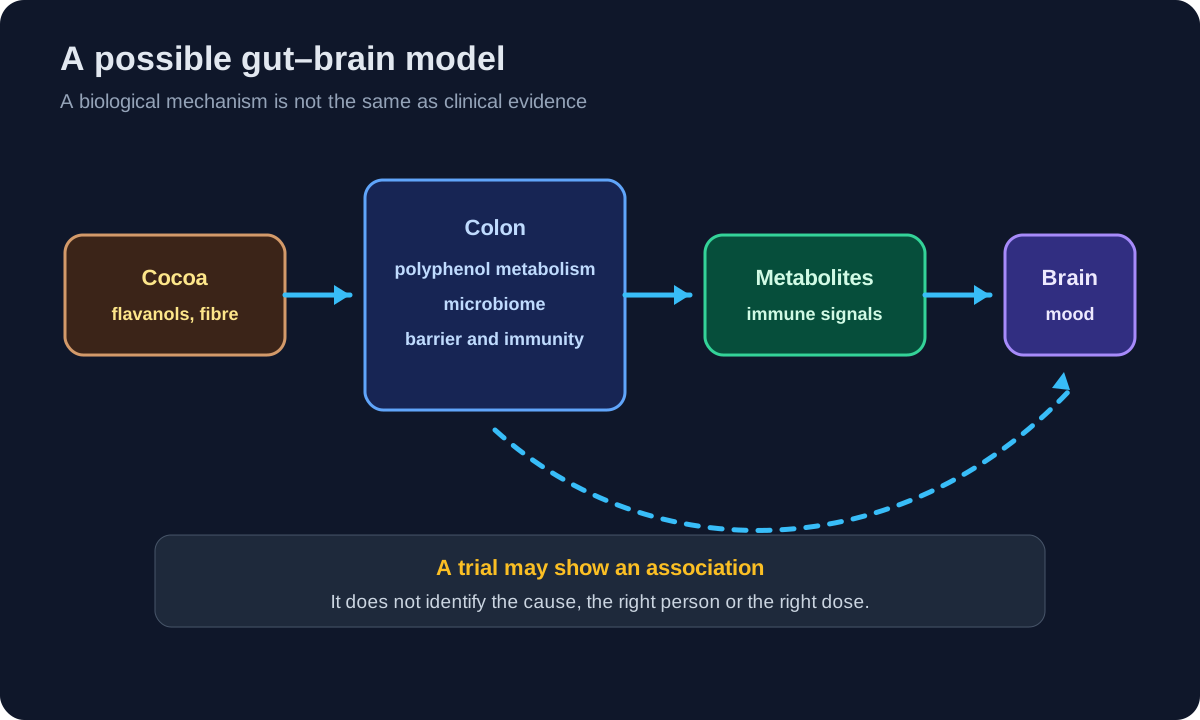
The most defensible conclusion is narrower than a press headline: in a small three-week trial, 30 g of 85% cocoa chocolate per day was associated with lower negative affect and microbiome changes. That is an interesting signal, not evidence of therapy or a universal recipe for better mood.
1. What was actually studied?
The starting point is the randomized trial by Shin and colleagues, published in the Journal of Nutritional Biochemistry in 2022 (PMID 34530112). Healthy adults aged 20–30 were assigned to one of three groups: 18 participants ate 30 g of 85% cocoa chocolate daily, 16 received a 70% cocoa product and 14 ate no chocolate. The intervention lasted three weeks.
Mood was measured with the PANAS questionnaire. Stool samples from the 85% cocoa and control groups were also analysed using 16S rRNA sequencing. The 85% group showed lower negative affect and greater microbiome diversity than the no-chocolate group. The relative abundance of selected bacteria, including Blautia obeum and Faecalibacterium prausnitzii, also changed.
2. Why might cocoa reach the gut?
Cocoa contains flavanols such as epicatechin, catechin and procyanidins, as well as fibre, theobromine and a small amount of caffeine. Bean processing changes their proportions. Fermentation, drying, roasting and alkalization can lower some polyphenol levels, so the stated cocoa percentage is not equivalent to a measured flavanol dose.
A substantial proportion of polyphenols is not absorbed in its original form in the small intestine. In the colon, microorganisms can break larger molecules into smaller metabolites that may interact with the intestinal lining, immune system and metabolism. This is biologically plausible, but “can be transformed” does not mean “produces a clinical benefit”. Microbiome composition differs between people, as does the response to the same cocoa portion.
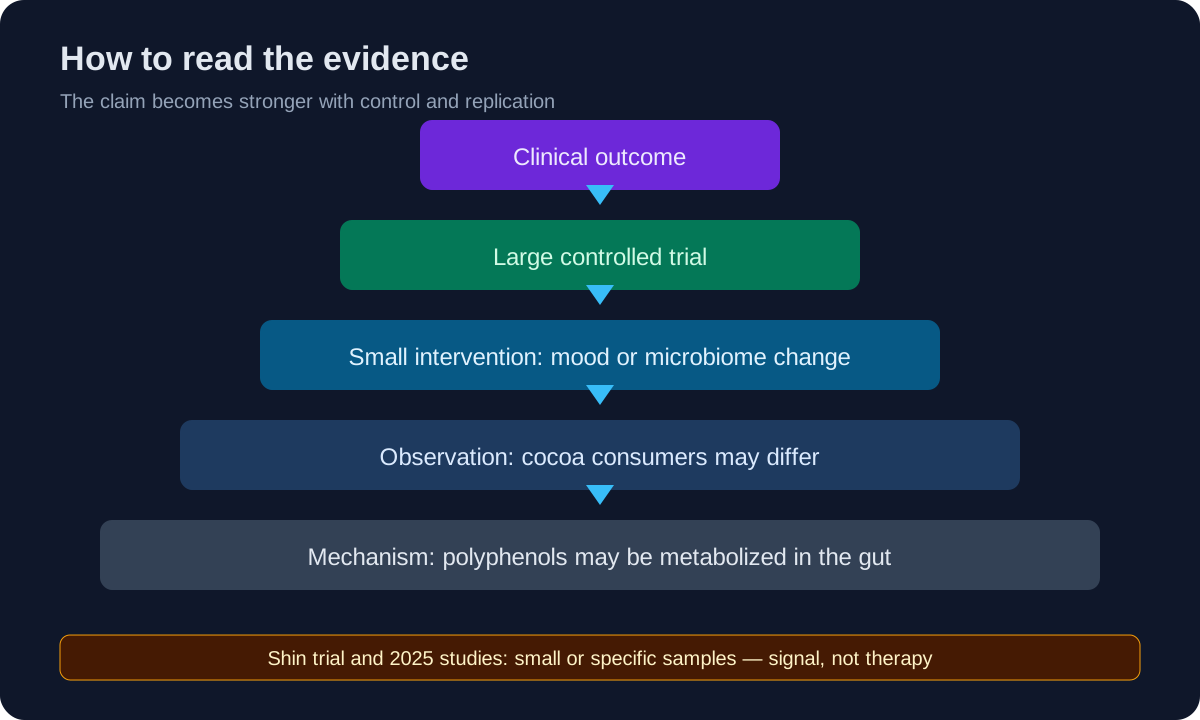
3. Earlier studies support the hypothesis, but do not settle it
This inconsistency is scientifically useful. It shows that effects may depend on the food matrix, dose, duration, measurement method, baseline microbiome and overall diet. The 85% chocolate trial tested a food, while the 2024 trial tested an isolated flavanol preparation; these are not interchangeable interventions.
4. What did the 2025 studies add?
Newer publications strengthen the cautious conclusion about the gut, but they do not provide a large clinical study that changes the interpretation of the mood evidence. They also examined different products, populations and biological levels; their findings cannot be combined as though they were one intervention.
The common message is that the response depends on the product, dose, duration, food matrix, baseline microbiome and health status. None of these publications establishes a health claim about improved mood or justifies calling ordinary chocolate a “prebiotic” without qualification.
5. What about the brain?
The gut–brain axis involves several routes: the vagus nerve, microbial metabolites, immune signals, hormones and diet-related metabolism. This does not mean that one bacterium produces a “happiness hormone” that travels straight to the brain after chocolate is eaten. That is a popular but overly simple shortcut.
Flavanol research also suggests possible vascular effects and direct actions of metabolites on neural cells. Cognitive findings remain mixed. In the COSMOS clinical subcohort, 573 older adults received cocoa extract providing 500 mg flavanols per day or placebo; after two years, there was no significant improvement in global cognition, episodic memory or executive function. This does not exclude short-term effects, but it weakens the claim that cocoa supplementation durably “boosts the brain”.
6. How can consumers avoid false certainty?
- Do not treat cocoa percentage as a laboratory result. 85% describes the recipe, not the flavanol dose or microbiome effect.
- Check sugar and portion size. Chocolate is energy-dense; possible polyphenol benefits do not cancel excess sugar and calories.
- Do not assume “raw” or “non-alkalized” automatically means better. Safety, quality and the actual composition also matter.
- Treat 30 g as the dose in one study, not medical advice. The Shin trial did not establish an optimal dose for the population.
- Consider caffeine and theobromine. People who are sensitive, pregnant or breastfeeding, or who have reflux, migraine or heart disease should discuss personal tolerance with a clinician.
7. What may be said on a label?
In the European Union, the authorized health claim for cocoa flavanols concerns maintaining the elasticity of blood vessels, which contributes to normal blood flow. Commission Regulation (EU) 2015/539 sets a condition of 200 mg cocoa flavanols per day, with a degree of polymerisation of 1–10, for specified product categories. It does not authorize claims that chocolate “improves mood”, “repairs the microbiome”, “treats the gut” or “protects the brain”.
An EFSA opinion is a scientific assessment, not a free-standing permission to use any marketing wording. Each statement must be assessed against its wording, product category and the conditions in food-claims law. A single 85% cocoa trial does not create a new authorized health claim.
Conclusion
High-cocoa chocolate is an interesting carrier of polyphenols, and research suggests possible relationships between flavanols, the microbiome and some gut functions. The Shin trial remains the key small signal concerning mood and the microbiome. Data published in 2025 add signals concerning bowel movements, endotoxaemia markers, and microbiome responses that vary by person and gut location, but they also come from small studies, in-vitro models and animals. They do not amount to evidence for therapy, a “prebiotic” effect of ordinary chocolate or guaranteed “brain nourishment”.
Sources and further reading
- Shin JH et al., Journal of Nutritional Biochemistry (2022), PMID 34530112 — randomized 85% and 70% cocoa trial.
- Tzounis X et al., American Journal of Clinical Nutrition (2011), PMID 21068351 — high- and low-flavanol crossover trial.
- Suther C et al., Journal of Nutritional Science (2024), PMC11704926 — short-term cocoa-derived flavanols and the microbiome.
- Tsang C et al., Nutrients (2019), PMC6616509 — high-polyphenol chocolate, cortisol and mood.
- Sorrenti V et al., Nutrients (2020), PMC7400387 — cocoa polyphenol metabolism and microbiome interactions.
- Vyas CM et al., American Journal of Clinical Nutrition (2024), PMC11347806 — COSMOS and two-year cocoa-extract cognition results.
- Ito H et al., Bioscience of Microbiota, Food and Health (2025), PMID 40636155 — dark chocolate, constipation and the microbiome in Japanese women.
- Pannunzio A et al., Nutrition (2025), PMID 39693929, DOI 10.1016/j.nut.2024.112643 — dark chocolate, LPS and zonulin in patients with MASH.
- Kim J et al., Current Issues in Molecular Biology (2025), 47, 414 — in vitro enterotype-dependent responses to cocoa.
- Hayden M et al., Nutrients (2025), 17, 2876, PMID 40944264 — mouse study of site-specific microbiome changes.
- Commission Regulation (EU) 2015/539 — authorized cocoa-flavanol claim and conditions of use.
- The Epoch Times: How Chocolate Nourishes the Gut and Mind — journalistic starting point only; this article is an independent synthesis based on primary publications.